Kidandali to Lugaflow: Uganda’s 5 Music Genres Explained
Pull up Uganda’s YouTube trending chart on any given Friday and you won’t find a single genre dominating. Sheebah is there with something that hits like a dancehall anthem, her “Nsi Namba” the current top-viewed Ugandan release in the dataset at 1,090,693 views. Joshua Baraka’s collaboration with UK producer Jae5 is lower down at 733,825 views, a track that could comfortably sit on a London Afrobeats playlist without anyone flinching. Fik Fameica has something in the mix that is unmistakably Ugandan rap, Luganda cadences and all. And a gospel record is accumulating views at a pace that surprises everyone who doesn’t follow that scene. This isn’t chaos. This is what a functioning multi-genre music industry looks like.
The international conversation about African music in 2026 defaults to Nigerian Afrobeats and Amapiano. Ugandan music rarely gets its own chapter. But the artists here have been building something specific and distinct for decades, and the YouTube numbers confirm it: Jose Chameleone has 223,325,598 total channel views across 338 videos. Sheebah has 209,101,015 views and 874,000 subscribers, the highest subscriber count in the entire tracked dataset of roughly 25 major Ugandan acts. Those aren’t borrowed numbers from a genre someone else invented. They come from music with a particular Ugandan identity, one built across five distinct genre families.
Kidandali: The Sound That Built the Industry
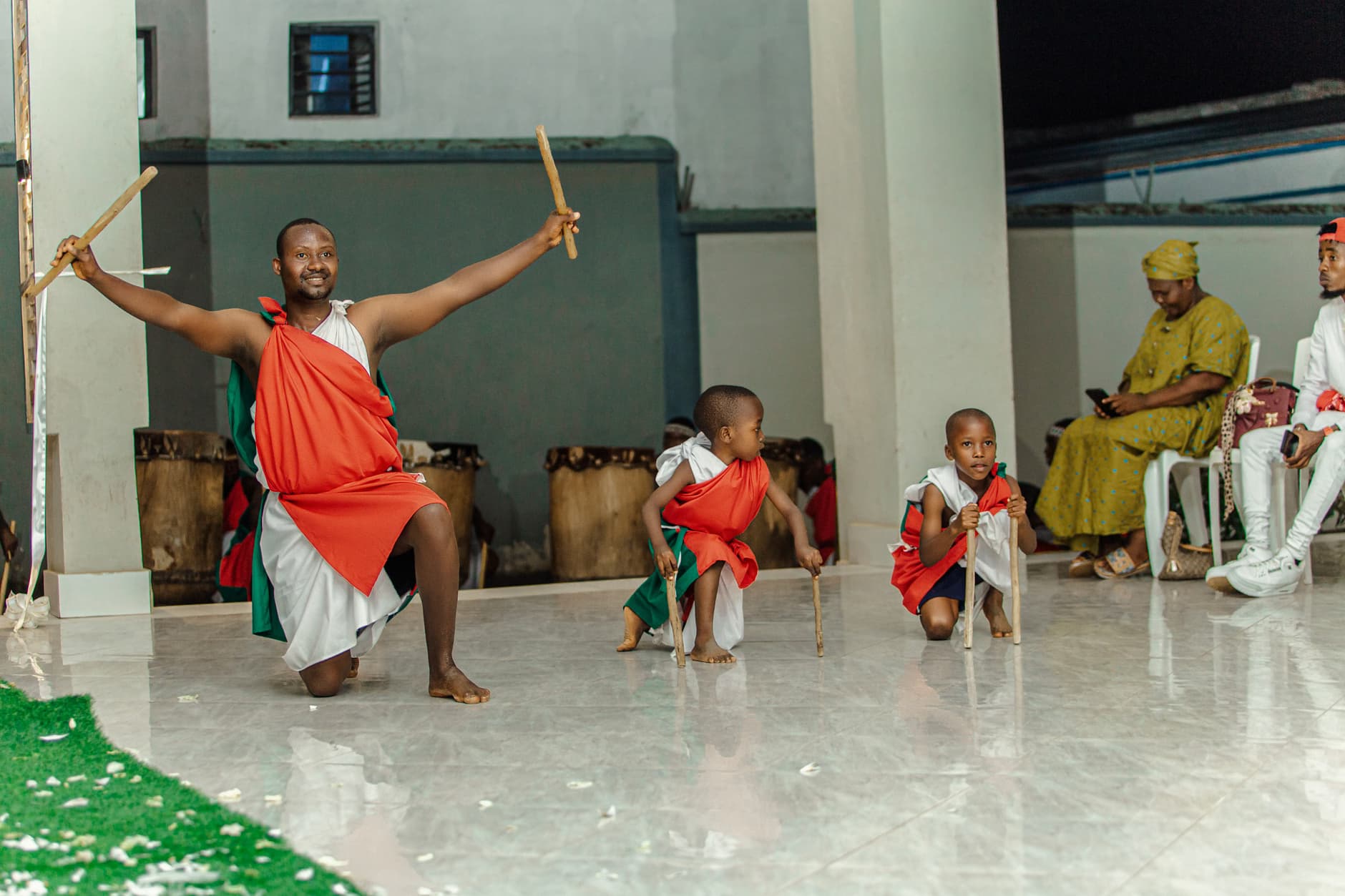
Kidandali is the genre most closely associated with the generation that built Uganda’s commercial music industry. At its core it’s East African party music, drawing from Congolese rumba rhythms, dancehall energy, and the Luganda language, with a warmth and bounce that works equally well at a Friday night club in Kamwokya and a Sunday afternoon family gathering upcountry.
Chameleone is the name you need here. At 829,000 YouTube subscribers and 223,325,598 total views across 338 videos, his catalogue is both the most voluminous and the most-watched in Uganda’s tracked music data. That view count didn’t accumulate by accident. It represents decades of consistent hits and a fan relationship that has survived multiple eras of changing sound. Bebe Cool runs a similar arc: 408,000 subscribers, 97,737,281 total views, 260 videos. Two artists, two massive catalogues, both built on a party-first aesthetic that defined Uganda’s commercial music expansion.
What distinguishes Kidandali production? The groove sits lower in the mix than contemporary Afropop. The rhythmic patterns owe more to rumba and East African popular music than to the hi-hat-heavy percussion that drives the Nigerian mainstream. Lyrics lean into romance, celebration, and the pleasure of the night out, which is not a limitation. It’s a design decision that has proven wildly durable. These are songs that haven’t aged out of club rotation because they were never chasing a trend to begin with.
The dancehall strand within this tradition stays healthy. Alien Skin’s “Teach Dem” is pulling 182,625 views in the current trending period. DDT Musiramu’s “Ompana” has 110,842. The dancehall-inflected, Luganda-singing style that Kidandali helped establish is still generating active plays, not just nostalgia streams. If Chameleone and Bebe Cool represent the archival proof of concept, these newer artists are the evidence that the template keeps producing.
Lugaflow: Hip-Hop in the Mother Tongue
When Ugandan hip-hop fully committed to rapping in Luganda rather than English, it created something distinct enough to earn its own name. Lugaflow is Ugandan rap with the language and rhythm patterns of Luganda at the center, and it has built a genuinely committed audience without needing the international crossover conversation to sustain itself.
Fik Fameica’s numbers tell this story most clearly. He has 303,000 subscribers, 43,433,435 total views, and 303 videos, one of the highest video counts in the entire tracked dataset. That productivity signals something about the genre’s creative metabolism. Lugaflow doesn’t wait for a perfect production budget or a major co-sign. It drops consistently, it builds an audience through volume and quality together, and it treats the YouTube channel as a running record of an artist in full creative motion rather than a showcase for polished singles.
The style rewards close listening. Luganda is a tonal language with rhythmic logic that differs structurally from English or French, and the best Lugaflow artists have learned to use that logic as a feature rather than a workaround. The syllable stress lands differently. The wordplay operates on registers that don’t fully translate. A track can carry a crowd at a show in Ntinda even when a significant portion of the lyrics are opaque to outside listeners. That’s a sign of a genre operating entirely on its own terms.
A Pass occupies a slightly different corner of this space, more eclectic, blending rap sensibility with Afropop melody and a restless willingness to experiment. His recent collaboration “Miracles” with Kaboo has 260,297 views in the current data. The Lugaflow ecosystem runs wider than a single sound or a single speed.
Contemporary Ugandan Afropop: The Crossover Engine
The largest share of Uganda’s current chart activity lives in a zone easiest to describe as contemporary Afropop, melodic and production-forward, with influences spanning Nigerian Afrobeats, East African pop, and R&B. It’s the genre family most likely to travel internationally, and the data makes that trajectory visible.
Need help improving your CV?
UGX 10,000We rewrite and restructure your CV into a sharp, recruiter-ready document — fully editable and delivered in 3-5 hours.
See how it worksLook at the subscriber-to-views ratios for the newer generation. Azawi has 257,000 subscribers and 52,582,843 total views from 230 videos. Ykee Benda has 327,000 subscribers and 66,538,972 views across 362 videos. Joshua Baraka, at 244,000 subscribers, has already accumulated 64,797,177 total views, remarkable given the relative youth of his channel, and his Jae5 collaboration is the cleanest current example of what contemporary Ugandan Afropop can do when it reaches for an international production level: it holds up without losing its identity.
John Blaq belongs in this category too. “Ngezaako” has 252,944 views in the current trending period; his channel carries 243,000 subscribers and 38,717,690 total views from just 105 videos. That video count is worth pausing on. Far fewer uploads than Azawi or Ykee Benda, but the total views are competitive, meaning his output hits with above-average weight per release. In a genre where the temptation is to flood the timeline, selective and deliberate still works.
This is also the genre family where Uganda’s visual production arms race is most obvious. Music video quality has risen steeply, and in the Afropop mainstream an under-produced clip now reads as an outlier rather than the baseline. Production values have become part of the genre’s identity as much as the sound itself.
Gospel: The Quietly Massive Scene
Gospel music might be the most underestimated genre in Uganda’s music economy. It doesn’t dominate the trending chart with the same regularity as Afropop or Kidandali anthems. But its audience is enormous, deeply loyal, and geographically spread in ways that the secular chart doesn’t always reflect.
Lydia Jazmine, who works in gospel-influenced pop territory, has 235,000 subscribers and 57,366,007 total views from 256 videos. Her “Ameenallah” had accumulated 215,073 views in the current period, and the engagement tells the real story: 5,739 likes against 529 comments is an audience that is paying close attention rather than passively scrolling past. Chosen Becky’s “Zabike” is in Uganda’s trending data with 98,149 views, representing a newer voice building within the explicitly gospel space.
The genre also bleeds across into the secular mainstream in ways that are hard to map neatly. Rema Namakula’s sound sits in devotional-adjacent territory while she functions as one of Uganda’s most commercially successful acts outright: 580,000 subscribers, 159,448,694 total views from just 65 videos. That works out to an average of roughly 2.45 million views per video, the highest per-video figure in the entire tracked dataset. Some of the most-watched Ugandan music online occupies the blurry space between worship and love song, and that’s not an accident. It’s a read on what Uganda’s audience actually wants from music.
Band Music: The Live Tradition That Won’t Sit Down
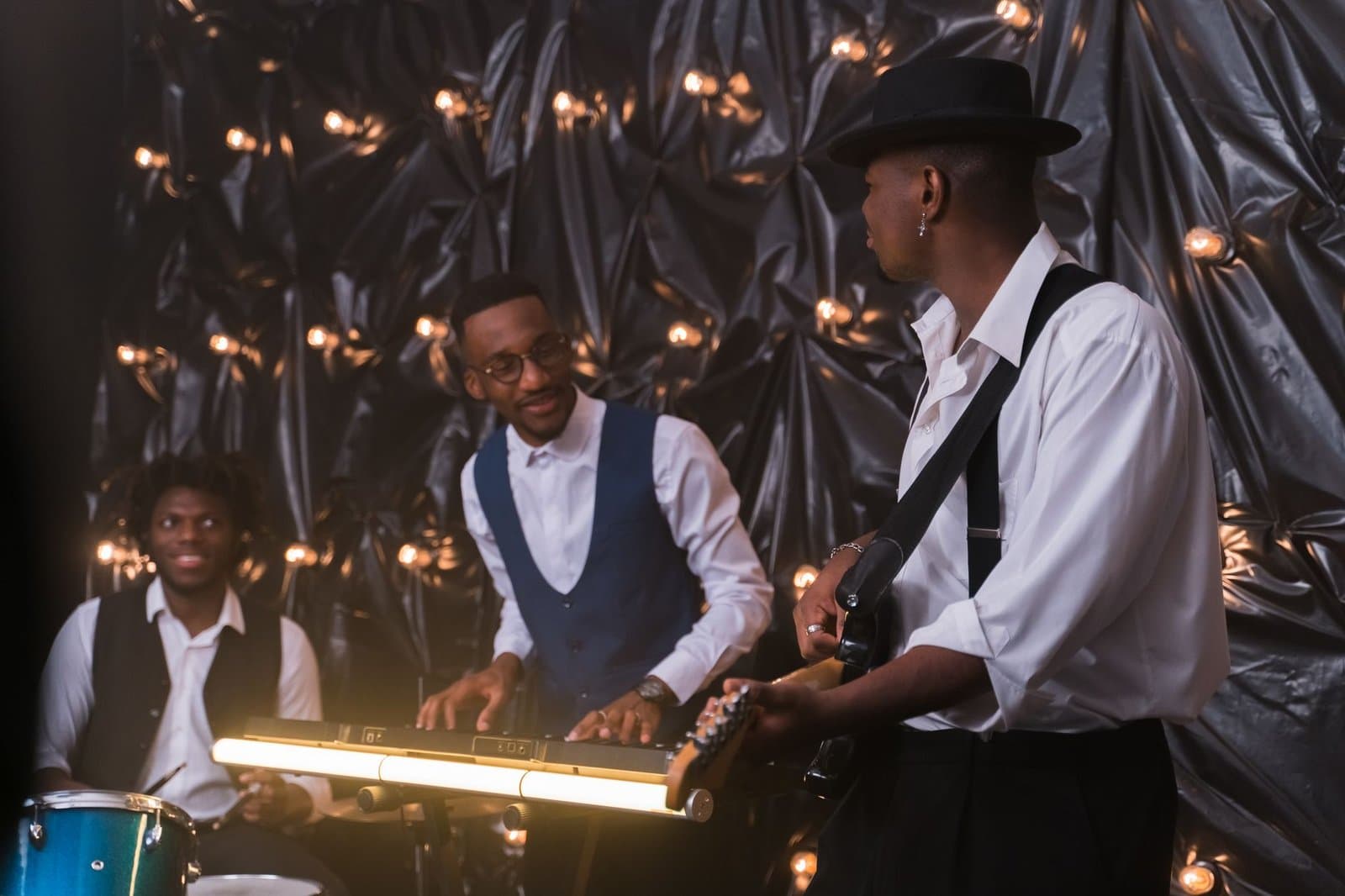
Uganda has a deep tradition of live-band performance, and it feeds into the music industry in ways streaming data can’t fully capture. Band music — live ensembles playing originals and popular repertoire at clubs, hotels, and private events — shaped the musical vocabulary of generations of Ugandan artists who came up watching and eventually playing these sessions before the recording studio became the primary stage.
This is where the limits of YouTube metrics as a genre map become clear. Band music doesn’t chart in the usual sense. Its value is embodied: the interaction between musicians in real time, the reading of a room, the version of a song that gets rearranged mid-set when the crowd needs something different. That craft is alive in Uganda. You’ll find it at venues that never appear on any trending list.
King Saha, who has 295,000 subscribers and 74,820,678 total views from just 82 videos, carries some of that live-band DNA into his recordings. His “Wekka” collaboration with Winnie Wa Mummy has 283,372 views in the current trending period. The video count in his catalogue is strikingly low relative to his view total, suggesting an artist who is selective rather than prolific, closer in temperament to a live performer than a studio machine. The band music tradition shapes artists even when it doesn’t show up on the chart.
All Five Are Mixing, and That’s the Point
The cleanest summary of Uganda’s music scene in 2026 is that genre lines are dissolving faster than they’re being drawn. The most commercially successful artists are not purists. Sheebah’s “Nsi Namba” with T Paul 256, currently sitting at 1,090,693 views, doesn’t fit neatly into any single category above. Neither does Joshua Baraka’s Jae5 collaboration, or the “Stay Remix” from Gael Will featuring Cindy Sanyu, which has 925,987 views. These tracks are in conversation with global trends while keeping something distinctly Ugandan in the production and the delivery.
What the view counts confirm is that all five genre families are healthy enough to sustain this mixing. Kidandali’s founding generation is still active and still moving audiences. Lugaflow is prolific and artistically ambitious. The Afropop mainstream produces work that competes internationally. Gospel has its own massive orbit. And the live tradition keeps feeding talent into all of it.
The next genuinely new Ugandan sound is probably already being made at the intersection of at least two of these families. A Lugaflow artist who starts singing. A gospel vocalist who leans into Afrobeats production. A Kidandali veteran who drops something with a production approach borrowed from the newer generation. That’s where the interesting things have always happened here, and the data suggests all five genres are in good enough health to keep colliding for a long time yet.
Keep up with Uganda’s music at Wolokoso on The Kampala Index. For more on the numbers behind these artists, read our breakdowns on Uganda’s top music YouTube channels ranked by total views and which Ugandan artists average the most views per video.