7 Ugandan Filmmakers Writing the Country’s Screen Story
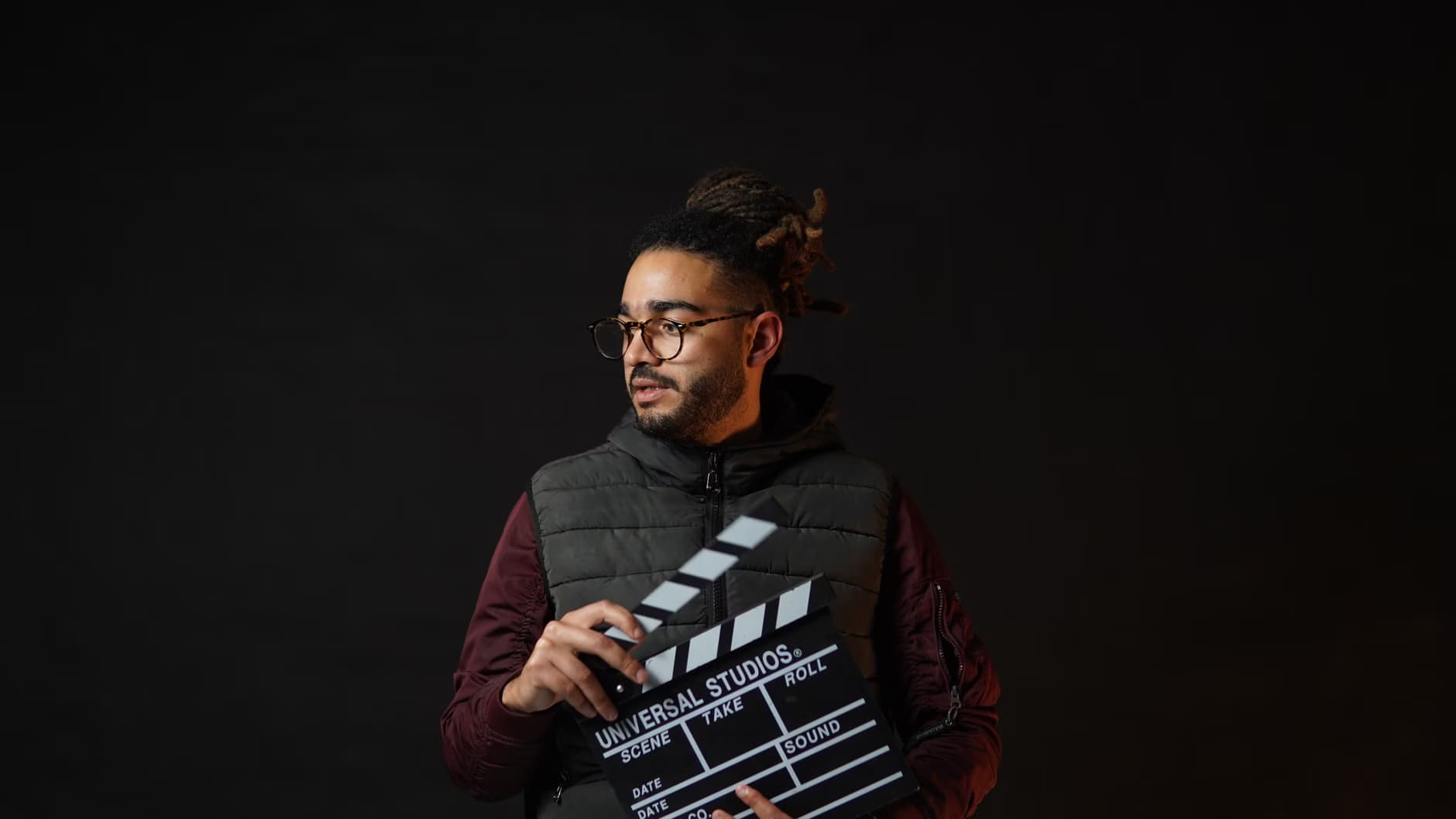
The year Nabwana I.G.G. started drawing Quentin Tarantino comparisons from international media, he was shooting in a low-income Kampala neighbourhood with consumer cameras and community volunteers. No studio deal. No formal distribution. Just a very specific vision and the discipline to execute it. Uganda’s screen tradition has rarely waited for ideal conditions. It has been built, script by script and frame by frame, by people who understood that the story is the thing. Here are seven of the filmmakers and screen creators who are doing that building.
#7. Rose Mbowa: The Academic Who Laid the Foundation
Every screen industry needs institutions behind the talent, and Rose Mbowa was one of Uganda’s most important. A Ugandan writer, actress, academic and feminist, Mbowa served as a professor of Theatre Arts and Drama at Makerere University, the oldest and largest public university in Uganda. Theatre and screen are adjacent disciplines, and the training pipeline Mbowa worked within produced a substantial portion of the practitioners who went on to build Uganda’s contemporary entertainment industry.
Her significance runs in two directions: the specific work she created as a writer and performer, and the students she trained and the institutional legitimacy she helped establish for storytelling as a serious professional pursuit. Makerere’s Theatre Arts programme has been one of the main routes through which Uganda has produced professional storytellers, and Mbowa’s presence there as a professor shaped who came through that pipeline and what standards they were trained to meet. Mbowa’s place in Ugandan screen culture is foundational in a way that resists a single credit line. Placing her seventh is a matter of list mechanics. Her contribution to the broader ecosystem runs deeper than any one project she put her name on.
#6. Mathew Nabwiso: Three Films, Two Functions
Most practitioners in any film industry work on one side of the camera or the other. Mathew Nabwiso has built a career that operates on both. He is a Ugandan actor known for his roles in the films Imbabazi, Rain and Kyaddala, and he is also a director and producer. That combination, three named features as a performer plus behind-the-camera credits, gives him a breadth of contribution that many Uganda-based practitioners haven’t matched.
He is also a singer, which extends his creative range further still. The Ugandan independent film space at this stage of its development rewards versatility: productions don’t always carry the resources to separate every function cleanly, and practitioners who can move between roles across a single project are disproportionately useful. Nabwiso’s ability to operate in front of and behind the camera, on named projects that can be looked up and verified, anchors his place on this list.
#5. Michael Wawuyo Jr.: Central Figure, Two Platforms
Television reaches more Ugandan households than cinema screens do. The most-watched Ugandan narrative content over the past decade has come through drama series airing on NTV and similar channels, not through films screening in Kampala’s limited theatrical venues. Michael Wawuyo Jr. built his national profile at exactly that intersection. He became widely known for his role as Brother John in The Hostel, the popular television drama on NTV that has been one of Uganda’s most viewed narrative series.
He is also a filmmaker and producer in his own right. His Wikipedia entry describes him as “a central figure in modern Ugandan cinema,” a description that encyclopaedias reserve for people with a substantial and recognised body of work. Wawuyo Jr.’s contribution spans mass-audience television through The Hostel and his parallel work as a filmmaker, giving him a reach across two platforms that most Ugandan screen practitioners occupy separately rather than simultaneously.
#4. Morris Mugisha: Twelve Nominations and a Reality TV Background
The sequence is unusual: Big Brother Africa season three in 2008, then a feature film that received twelve nominations at the Uganda Film Festival. Morris Mugisha is a Ugandan actor, director, photographer, model and reality television personality who represented Uganda in the third season of the pan-African Big Brother franchise, at the time one of the continent’s highest-profile television formats. That gave him a public profile that most Ugandan filmmakers have not had access to when they began making features.
The film he directed, Stain, received twelve nominations at the Uganda Film Festival Awards, which is a significant haul for a single project at a national festival. Twelve nominations places Stain among the most formally recognised Ugandan features of recent memory. The fact that Mugisha arrived at that result after a reality television career rather than a traditional filmmaking apprenticeship makes the achievement more interesting, not less. His route into narrative feature work is one of the more distinctive professional pivots in Ugandan entertainment.
#3. Hadijah Nakanjako: Debut Film, Continental Recognition
Need help improving your CV?
UGX 10,000We rewrite and restructure your CV into a sharp, recruiter-ready document — fully editable and delivered in 3-5 hours.
See how it worksWinning the best indigenous film category at the Uganda Film Festival Awards is a result most Ugandan directors spend years working toward. Hadijah Nakanjako reached it on her first feature. She is a Ugandan actress, film director and producer whose debut, The Passenger, took the best indigenous film prize at the Uganda Film Festival Awards and then received two nominations at the Africa Movie Video Academy Awards.
The AMVCA is the most prominent film and television awards event in Africa, drawing entries and recognition from across the continent. Two nominations at that level from a first feature is not a routine outcome. Nakanjako’s debut landed simultaneous recognition at the national festival and at a continental ceremony, a combination that separates her from the broader pool of emerging Ugandan directors. Starting where most filmmakers spend years trying to reach earns her the third position on this list.
#2. Nana Kagga: The Prolific Scriptwriter Behind the Screen
Scripts are the starting point for everything that gets made. The Ugandan television landscape of the past decade looks significantly different because of the work Nana Kagga has written, directed and produced. She is a Ugandan filmmaker, scriptwriter and actress who wrote and directed the 2012 film The Life and served as writer and executive producer of the television series Beneath the Lies. Her writing credits extend further: Mukisa, My Sister’s Keeper (co-written with Clive Nshiime), Pieces of Me and more.
She is also the co-owner of Savannah Films, a production house that sits at the infrastructure end of Ugandan screen production. That combination of writing credits, directing, executive producing and ownership stakes covers more of the value chain than almost any other individual in the Ugandan screen space. Kagga’s output is not a single standout project. It is a sustained body of work spanning features and television, spread across more than a decade. Volume and consistency at that level, in a market where both are hard to sustain, is why she ranks second.
For an emerging screen industry, the person who consistently delivers finished work matters as much as any individual breakthrough. Scripts need to be started, budgets need to be managed, productions need to get off the floor and reach an audience. Kagga has done all of that repeatedly, across different formats, and that sustained output is a harder thing to maintain than any single award-winning debut.
#1. Nabwana I.G.G.: Wakaliwood and the World’s Attention
The studio is in Wakaliga, a low-income area on the outskirts of Kampala. The equipment is consumer grade, funded partly through donations. The performers are community members from the neighbourhood. The sets are built from what Wakaliga has available. The action sequences are physically improvised. The films produced in this studio have been described as “popular ultra-low budget action comedy films” and have drawn comparisons, in international coverage, to the work of Quentin Tarantino.
That studio is Wakaliwood. Its founder is Isaac Godfrey Geoffrey Nabwana, known as Nabwana I.G.G., a Ugandan film director, cinematographer, writer and producer. His approach to making films operates entirely outside the assumptions mainstream cinema makes about what resources are required, what infrastructure is necessary and what kind of institutional backing a filmmaker needs before their work is worth taking seriously. The international press coverage is not manufactured. The Tarantino comparison exists in his encyclopaedia entry not as a marketing phrase but as the shorthand external commentators reached for independently when they tried to describe what they were watching.
Ugandan cinema did not need multiplex screens, distribution deals or co-production money from abroad to produce something genuinely original and globally noticed. Nabwana demonstrated that before most of the other filmmakers on this list had made their first projects. What he built in Wakaliga is distinctive by Ugandan standards, distinctive by African standards and distinctive enough that international media covered it without being asked. On a list of Ugandan filmmakers ranked by the uniqueness of what they have put on screen, he is not a close first. He is the obvious one.
Uganda’s screen story doesn’t stop at film. For the performers who built national careers through broadcasting rather than cinema, read about eight Ugandan media personalities who became household names. For the comedians who found that a punchline was the start, not the destination, see seven Ugandan comedians who built careers far beyond stand-up. And for those who turned a music career into something larger, eight Ugandan musicians who built more than a music career covers the ground.
The full archive of Uganda’s public figures and creative class is at the Wolokoso desk.